
Beyond the Basics: The New Science of Sound Healing for Deeper Sleep
Updated: Aug 2
Introduction: What’s New in the World of Sleep Sound Healing

In our previous post, “Finally Catch Those Zzz’s: Sound Healing Solutions to Sleepless Nights,” we explored how sound healing can help quiet the mind and support better rest.
This time, we’re diving deeper. The science of sound and sleep has expanded rapidly. New studies are exploring which frequencies, tempos, and rhythms truly help us reach deeper stages of rest.
Here’s what the latest research—and our real-world experience at Serendipity Sounds—reveals about using music, frequency, and mindful listening to improve your sleep naturally.
From Relaxation to Deep Restoration: What’s Changed Since Our Last Post

When we first talked about sound healing for sleep, we focused on relaxation—helping your body unwind before bed. Today’s studies reveal that the right frequencies do more than help you fall asleep. They can actually enhance the depth and quality of your sleep.
Low-frequency tones (0.5–8 Hz) like delta and theta waves mirror your brain’s natural deep-sleep rhythms. Music tuned to 432 Hz has been shown to reduce heart rate and stress markers compared to 440 Hz. Soundscapes that mimic nature—like rain, waves, or forest sounds—can help maintain restorative sleep throughout the night.
The New Research: How Frequencies Affect Your Sleep Cycles
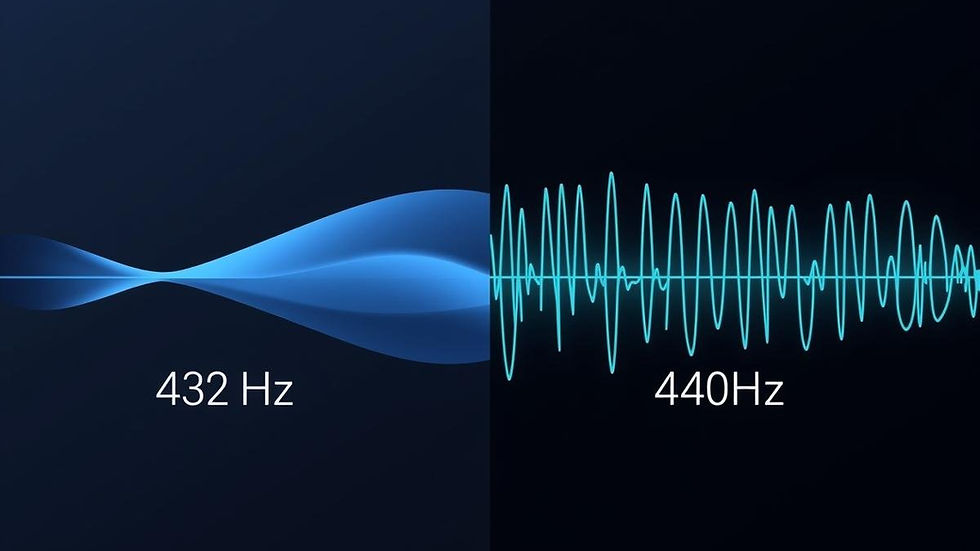
A growing number of studies support the link between frequency and restorative rest:
A 2022 pilot study found that listening to 432 Hz music before bed improved deep sleep stages in participants.
Calamassi et al. (2020) showed that 432 Hz music improved sleep quality in patients with spinal cord injuries.
2022 research on emergency nurses revealed that music tuned to 432 Hz helped reduce anxiety and promote recovery sleep.
These studies all point to one conclusion: frequency matters, but so does your emotional response to the sound. Some people find scientifically tuned frequencies deeply relaxing. Others sleep best with familiar, self-chosen music. A 2024 study compared user-chosen tracks with researcher-assigned frequencies. Both worked equally well when the listener felt calm and connected to the music.
One open question in a frequency-based sleep ritual is whether the sound is actually reaching the deeper stages you're aiming for on any given night. Individual response varies, and traditional trackers infer sleep from movement or heart rate, then hand you a score in the morning. NextSense builds Smartbuds, earbuds with in-ear EEG sensors (electroencephalography, a direct measure of brain activity) that read the brain while you sleep and adapt the audio in real time to support slow-wave activity, the restorative stage tied to physical recovery and memory. In a peer-reviewed study in Bioelectronic Medicine, this in-ear EEG reached substantial agreement with polysomnography, the clinical gold standard for sleep staging. That closes the loop between the sound you're listening to and how your brain is actually responding to it.
Building Your Personalized Sleep Sound Ritual

Sound healing works best as a ritual—a consistent cue that tells your body it’s safe to let go. Try this simple structure:
1. Start 20–30 minutes before bed. Dim the lights, slow your breathing, and begin your playlist.
2. Choose your sound. Try ambient 432 Hz music or delta-wave drones. If you prefer natural sound, experiment with ocean waves or rainfall.
3. Lower the volume. Keep it subtle—your nervous system should feel comforted, not stimulated.
4. Add mindfulness. Focus on your breath or repeat a calming mantra as the music plays. Visualize releasing the day’s tension with every exhale.
5. Let it fade. Set your playlist to end naturally instead of looping all night.
You can also explore our Sound Healing & Mindfulness Classes—offered online and in-studio—to learn how to combine music, meditation, and energy work for deeper sleep.
How Mindfulness Enhances Sound Healing for Sleep

Meditation amplifies the effects of sound. When you listen mindfully—not as background noise but as an active, sensory experience—your parasympathetic system activates faster, signaling your body to rest.
Mindful sound practices can include:
Focused breathing while listening to slow tones.
Body scanning—noticing sensations as sound flows through you.
Intentional listening—allowing your mind to settle on a single tone or rhythm.
At Serendipity Sounds, we teach these mindful sound healing methods through our guided meditation programs.
Sleep Sound Recommendations You Can Try Tonight

🎧 Try these to start:
Experiment with each, note how your body feels, and adjust your ritual accordingly.
The Benefits of Sound Healing for Sleep
Sound healing is more than just a method for falling asleep. It offers a range of benefits that can enhance your overall well-being.
Reduces Stress and Anxiety
Listening to calming sounds can lower cortisol levels, the hormone associated with stress. This reduction can create a more peaceful state of mind, making it easier to drift into sleep.
Improves Sleep Quality
By using specific frequencies, sound healing can enhance the quality of your sleep. This means not only falling asleep faster but also experiencing deeper, more restorative sleep cycles.
Promotes Mindfulness
Incorporating sound healing into your bedtime routine encourages mindfulness. This practice helps you become more aware of your thoughts and feelings, allowing you to release tension and embrace relaxation.
Final Thoughts: The Art of Rest Through Sound

Sound healing for sleep has moved beyond relaxation playlists. It’s becoming a nuanced science of vibration, rhythm, and mindful listening.
Whether you use 432 Hz frequencies, delta soundscapes, or your favorite soothing track, consistency is key. Over time, your brain will begin to associate these tones with deep, effortless rest.
At Serendipity Sounds, we continue to explore new ways to help you reconnect with your natural rhythms—through sound, meditation, and mindful awareness.
FAQs (Voice Search Optimized)
Q: What frequency is best for deep sleep?
Delta (0.5–4 Hz) and 432 Hz frequencies are most associated with deep relaxation and restorative sleep.
Q: Can meditation and sound healing work together for better sleep?
Yes—mindfulness amplifies your nervous system’s relaxation response, helping sound healing take effect faster.
Q: How long should I listen to sleep frequencies?
15–30 minutes before bed is ideal. Allow the sound to fade naturally as you drift off.


Comments